Maintaining level crossings
Level crossing maintenance and safety
Who is responsible for maintaining level crossings?
Level crossings are maintained by a number of organisations, depending on the type of crossing and its location.
KiwiRail's responsibilities
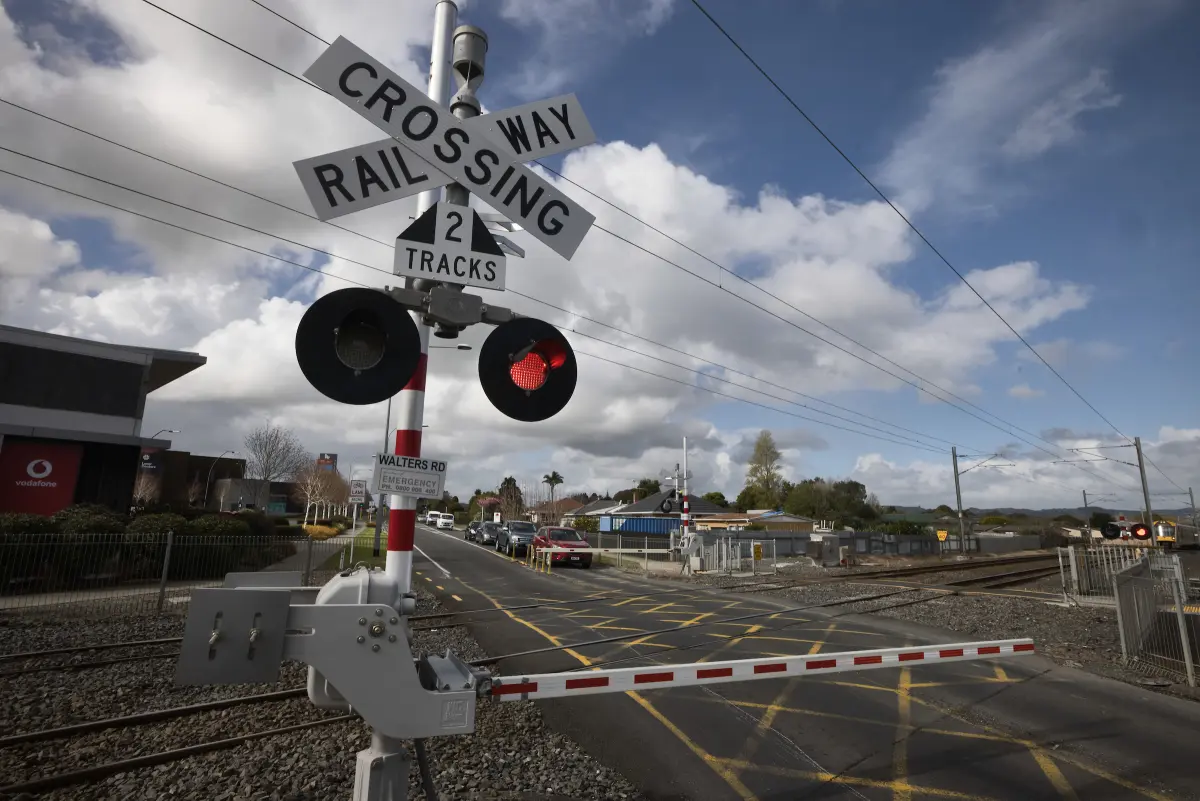
KiwiRail maintains safety equipment at public level crossings, including:
- Barrier arms
- Warning lights
- Bells
- Railway crossing signs
We also maintain:
- The road surface within five metres of the railway tracks
- Visibility at crossings, including managing vegetation to help people see approaching trains
Council and road authority responsibilities
Road controlling authorities, usually local councils, are responsible for:
- Road markings at level crossings
- The road surface leading up to a crossing
- Advance warning signs, including yellow railway warning signs
- Paths and fencing at standalone pedestrian level crossings
Private level crossings
At private level crossings, the landowner or crossing holder is responsible for maintenance and upgrades.
KiwiRail works closely with councils, transport agencies and landowners to help ensure crossings remain safe for all users.
Report a level crossing issue
Report a level crossing issue
If there is an immediate safety risk at a public level crossing, call our 24-hour emergency line:
0800 808 400
Non-urgent maintenance issues
To report a maintenance issue, contact us.
We will either arrange the work ourselves or pass the issue to the organisation responsible for maintaining that part of the crossing.
Improving level crossing safety
Safety improvements at level crossings are an ongoing priority.
KiwiRail works with NZTA Waka Kotahi, local councils and other transport partners to identify high-risk crossings and improve safety for road users, pedestrians and train services.
This could include:
- Upgrading warning systems
- Improving visibility
- Installing additional protection
- Closing crossings where appropriate
- Replacing crossings with bridges or underpasses
Level crossing risk assessments
The Australian Level Crossing Assessment Model (ALCAM) is the primary tool used to assess level crossing risk in New Zealand.
Adopted in New Zealand in 2014, ALCAM helps identify crossings where safety improvements may be needed. The model supports a proactive approach to safety by assessing risk factors and helping prioritise improvements across the rail network.
Level Crossing Risk Management Guide
The Level Crossing Risk Management Guide (LCRMG) Version 6 is a jointly owned KiwiRail and NZTA transport industry document.