Private level crossings
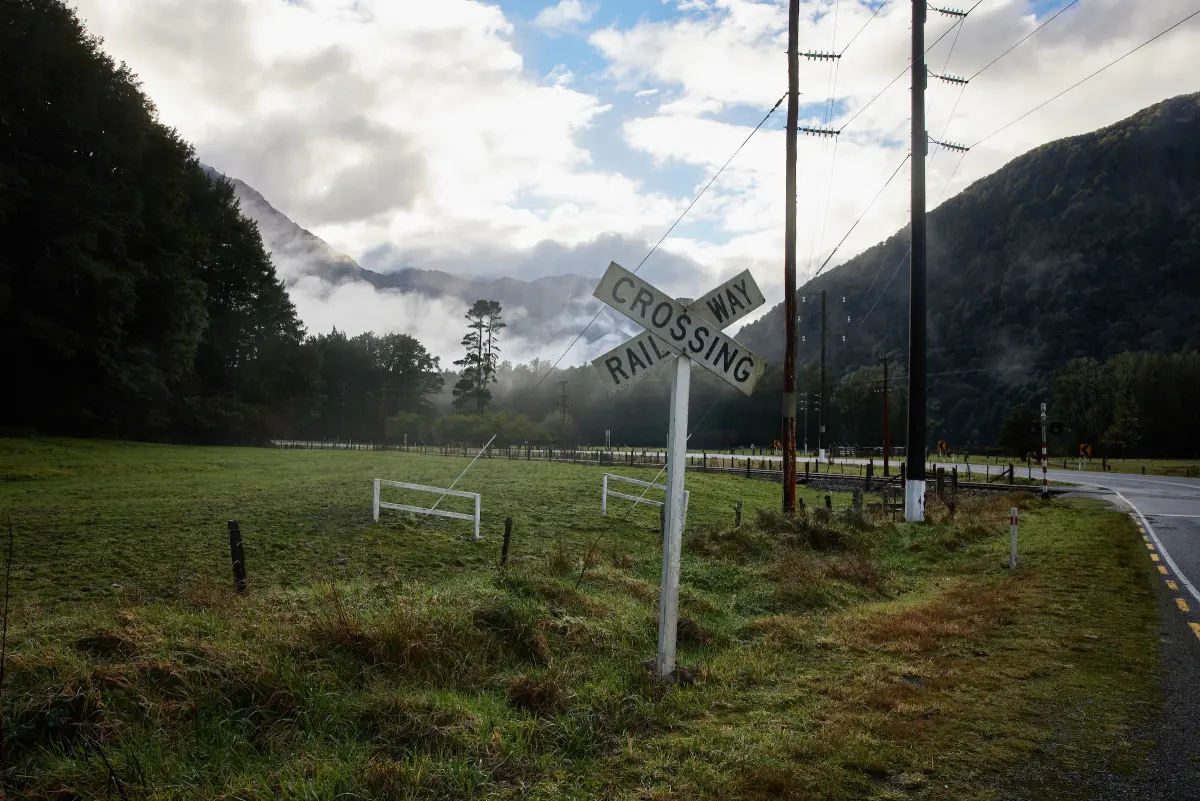
Requirements and guidance for private level crossings
Private level crossings provide access across the railway to private land and are common in rural areas. If you own or use a property with a private crossing, you must have a valid agreement in place with KiwiRail to permit access and you are responsible for ensuring it is used safely.
Shared responsibility
KiwiRail and the crossing owner share responsibility for managing private crossings safely.
Users of private level crossings are responsible for:
-
meeting maintenance, repair, and safety upgrade costs where required.
-
ensuring the crossing is used safely
-
complying with any conditions relating to the crossing.
KiwiRail may close a crossing if safety concerns arise.
New private crossings
Because level crossings create safety risks for both rail and road users, KiwiRail seeks to minimise the number of crossings on the rail network.
New subdivisions and developments must have legal road access and cannot rely solely on a private level crossing. Where new crossings are required, grade-separated solutions such as bridges or underpasses are preferred.
Contact us
For enquiries about private level crossings, email level.crossings@kiwirail.co.nz
Level crossing FAQs
Level crossings are recognised internationally as introducing risk into the rail and road/pathway networks.
KiwiRail regards safety as paramount, and endeavours to reduce the number of level crossings in New Zealand through closure and grade separation to make roads safer.
When a new crossing is requested or required, KiwiRail’s preference is for it to be grade separated (above or below the level of the rail network, such as a bridge or tunnel).
In all cases a new crossing (in whatever form) must meet all safety, technical, and railway operational requirements and legal requirements, and must not constrain the current and future use of the rail corridor for rail.
For more information see:
Level crossings fitted with barrier arms, lights and bells are designed to operate in a safe mode if a fault occurs.
When this happens, the barrier arms stay down and the warning signals remain active until the fault is fixed. This helps protect motorists, pedestrians and train services while technicians investigate the problem.
We're working to fix faults as quickly as possible
We understand these faults can cause delays and inconvenience. Our signalling and maintenance teams are available 24 hours a day, seven days a week, and respond as quickly as possible to restore normal operation.
If you believe a level crossing fault presents an immediate safety risk, call our emergency line on 0800 808 400.